I Asked God for a Partner in Crime SVG: A Designer’s Review
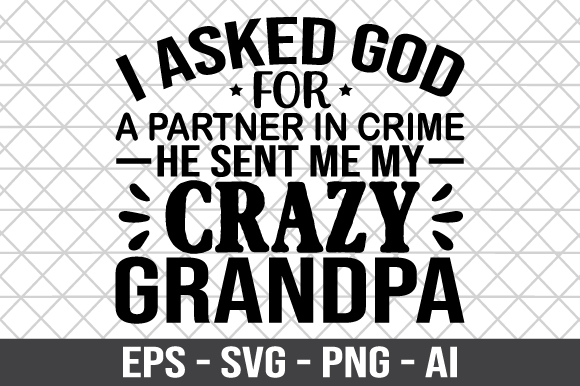
As soon as I opened the I Asked God for a Partner in Crime SVG file, I smiled. It’s one of those designs that instantly tells a story. The phrase itself is playful, a little cheeky, and deeply human. That’s exactly the kind of mood I look for when I’m planning an embroidery project for a boutique release or a personalized gift. The typography in this file carries a warm, hand-lettered feel—not stiff, not overly polished, but friendly and approachable. It feels like it belongs on a cozy sweatshirt, a soft kitchen towel, or a tote bag that someone will carry everywhere. The shape of the lettering is balanced, with just enough curve and flow to make the stitching process feel natural, not forced. I could already picture how the satin stitch would trace those letters, creating a smooth, slightly raised surface that catches the light.
The mood of the design is definitely relationship-centered, but not in a saccharine way. It’s the kind of sentiment that works for a best friend, a spouse, a sibling, or even a mom and child. That versatility is gold for anyone running a small craft business. You can position this I Asked God for a Partner in Crime SVG on a handmade product for Valentine’s Day, a bridal shower gift, or just a “just because” present. The emotional connection is immediate, and that’s what makes customers stop scrolling and click “add to cart.”
First Impressions of the Design Personality
When I evaluate a design for real embroidery use, I always ask myself: does this have enough visual personality to shine on fabric? The I Asked God for a Partner in Crime SVG does. It’s not just a block of text; there’s a subtle rhythm to the lettering. Some letters are slightly larger, some flow into the next, creating a natural, handwritten illusion. In a machine embroidery design, that kind of detail translates beautifully if you digitize it with care. The overall layout is horizontal, which makes it a natural fit for a chest print on a sweatshirt, a center placement on a tote bag, or a wide band on a kitchen towel. I immediately thought about how it would look on a soft cream fabric with a deep navy thread—classic, striking, and easy to read.
The design also leaves room for creative interpretation. You could add a subtle floral accent, a tiny heart, or even a small pair of handcuffs if you want to lean into the “partner in crime” theme. That flexibility is a huge plus for a craft business. The base design is strong enough to stand alone, but it’s also a friendly canvas for personalization. I’ve seen too many embroidery files that are overly complicated, with tiny details that get lost in thread. This one keeps it simple and smart. The letters are clear, with no bizarre thin strokes that would vanish on a textured fabric. That’s the kind of practical thinking I appreciate as a designer who actually stitches these files out.
Real-World Embroidery Performance on Different Products
Let me walk you through a scenario. Last week, I was preparing a batch of custom embroidered sweatshirts for a small boutique’s Valentine’s collection. I had a few different phrase designs to test, and the I Asked God for a Partner in Crime SVG was one of them. I set up my hoop with a medium-weight cotton blend sweatshirt, used a cutaway stabilizer, and chose a soft coral thread. The design digitized cleanly from the vector file. The satin stitch on the main words had a nice, even width, and the running stitch details on the smaller flourishes held up without puckering. The finished product looked as if it had been professionally embroidered by a higher-end brand. That’s the kind of result that builds customer trust.
On a tote bag, the design felt equally at home. I used a sturdy canvas and a slightly thicker thread to give it a bold, dimensional look. The horizontal layout stretched nicely across the front panel, and the lettering was legible from a distance. That’s important because people often judge a handmade product from across a craft fair table. If the design is too delicate or the text too small, you lose that instant recognition. With this one, you get a clear, confident statement.
For baby clothes or nursery decor, I’d probably scale the design down a bit, but only after testing. The letters are still wide enough to stitch cleanly at a smaller size, but you’ll want to check the smallest details like the dot over the “i” or the curves of the “g.” Those little areas can become problematic if the stitch density is too high for a tiny hoop. I always recommend a test stitch on a scrap of the same fabric you’ll use for the final product. With a design like this, you can also experiment with an applique approach. Imagine cutting the letters from a fun fabric and stitching them onto a onesie for a cheeky baby gift. That’s a creative twist that small shop owners love.
Navigating Fabric Challenges and Material Choices
Not every fabric is a friend to every design. The I Asked God for a Partner in Crime SVG has a friendly layout, but you still need to be mindful of texture. On a fluffy towel or a chunky knit, the letters might lose their crisp edges. I’d avoid high-pile fabrics unless you’re using a water-soluble topper to hold the stitches in place. Thin, stretchy fabrics like jersey or performance wear also need extra attention. The design’s lettering is smooth, but any stretch without proper stabilizer can pull the letters out of shape. I always use a firm cutaway stabilizer on stretchy garments and baste the fabric to the stabilizer before stitching. That keeps the “A” from looking like a squashed bug.
Dark fabrics are another consideration. The design doesn’t have a built-in outline, so if you’re stitching on black or navy, you’ll want a thread color that pops. A bright white, a metallic gold, or a neon pink could work beautifully. I also like to test the design in a black-and-white mockup to see if the shapes hold up without color cues. The I Asked God for a Partner in Crime SVG passed that test easily—the letterforms are distinct enough to read even in silhouette. That’s a sign of a well-thought-out design.
Curved surfaces, like caps, are a bit trickier. The horizontal alignment might need a slight arc to follow the cap’s curve. As a designer, I’d play with the vector file in my editing software, add a gentle bend, and then digitize it for that specific application. The included Ai File and EPS File make that kind of editing effortless. You can resize, reshape, and tweak the design to fit your exact project without losing quality. The SVG File is perfect for cutting machines as well, so if you’re doing a hybrid project with heat transfer vinyl and embroidery, you’ve got options. The Transparent PNG File is a handy bonus for creating product mockups or listing photos for your Etsy shop or craft business.
Building Customer Trust with a Cohesive Look
When someone buys a handmade embroidered item, they’re not just buying a product; they’re buying a feeling. The I Asked God for a Partner in Crime SVG delivers that feeling with warmth and wit. It’s the kind of design that makes a customer smile and say, “That’s so us.” That emotional hook is what turns a one-time buyer into a repeat customer. I’ve noticed that products with relatable, humorous, and heartfelt phrases tend to perform better on platforms like Etsy, especially when the presentation is polished. A clean embroidery job using this design on a high-quality blank instantly elevates the perceived value. You’re not just selling a sweatshirt; you’re selling a shared joke, a memory, a little badge of partnership.
From a brand consistency standpoint, this design is easy to replicate across multiple products. You can use the same phrase on a tote bag, a pillow cover, and a tea towel, creating a cohesive collection. That’s a smart move for small shop owners who want to establish a recognizable style. I’ve done this with other phrase designs, and customers often come back to complete the set. It’s a simple way to increase average order value without a lot of extra work.
Practical Tips for Embroidery Designers and Makers
Before you load this design into your embroidery machine, take a few minutes to do your homework. First, confirm the hoop size you intend to use. The design is scalable, but you’ll want to match the stitch-friendly dimensions to your hoop. I always digitize from the original vector and run a test stitch on a piece of inexpensive cotton. Watch for any areas where the thread might build up too thick, especially around letter intersections. Adjust the stitch density if needed. A slightly lower density can prevent the fabric from becoming stiff, which is important for wearables.
Check your thread color contrast against the fabric. A light thread on a dark background gives a bold look, while a tonal thread can create a subtle, elegant effect. I’ve seen this design stitched in a soft blush on oatmeal linen, and it looked like a high-end boutique piece. The key is to test, test, test. I also recommend running a test on a fabric similar to your final product—if you’re making a personalized gift on a baby blanket, test on a swatch of the same plush fabric. That way, you’ll know exactly how the stitches behave.
Don’t forget to check the licensing. The product description says this is a digital craft file, but as a small business owner, you need to know if you can use the finished embroidery on items you sell. I always look for clear commercial use terms. The download includes 1 Ai File, 1 EPS File, 1 SVG File, and 1 Transparent PNG File, which covers most design needs, but legal clarity is a must. If the terms aren’t included, reach out to the seller to confirm. It’s a small step that protects your business.
Where This Design Shines Brightest
After working with the design, I’d say its sweet spot is on custom apparel and handmade gifts. A cozy pullover, a linen apron, a canvas tote, or a decorative pillow cover all feel like natural fits. The phrase is short enough to be read quickly, but personal enough to spark conversation. For a craft fair product, this would be a standout item. Pair it with a simple floral accent or a tiny heart, and you’ve got a product that feels both trendy and timeless.
I could also see this design as an embroidered patch. Digitize it with a merrow border, and you’ve got a fun, removable patch that people can iron onto jackets, backpacks, or hats. The crisp lettering makes it ideal for a patch, and the playful theme attracts a wide audience. Because the design is delivered as a vector, you can size it up or down without losing the clean edges. That’s a huge advantage for anyone doing commercial embroidery work.
For digital product sellers and Etsy sellers, the I Asked God for a Partner in Crime SVG is also a great asset for creating printable mockups or design previews. You can use the PNG to show customers exactly how the finished product will look before you even thread a needle. That level of professionalism builds buyer confidence and sets your shop apart from the sea of generic listings. In a world where customers are scrolling fast, a clear, attractive mockup with a design that already has strong emotional appeal can make all the difference.
I appreciate that the file set is straightforward and ready to use. No endless layers to sort through, no weird clipping paths. You open the Ai File or SVG File, and the design is clean and ready for your project. Whether you’re a seasoned embroidery designer or a hobbyist just starting out, that simplicity saves time and frustration. The Graphics category this design falls under is broad, but when you treat it as a serious embroidery file asset, you realize it’s more than just a pretty phrase. It’s a tool for creating products that people actually want to buy and keep.
In the end, the I Asked God for a Partner in Crime SVG earns its place in my stash of go-to designs. It’s versatile, emotionally resonant, and technically sound for a wide range of embroidery projects. The fact that it comes in multiple formats means I can use it for stitching, cutting, or mocking up without jumping through hoops. I’ve already stitched it out on a few items, and each time, someone asked where they could get one. That’s the real test of a good design. It’s not just about how it looks on a screen; it’s about how it makes people feel when they see it finished on a tangible product. And this one? It makes them feel like they’ve found their person.